
Money Well Spent

Updated: Feb 2, 2023
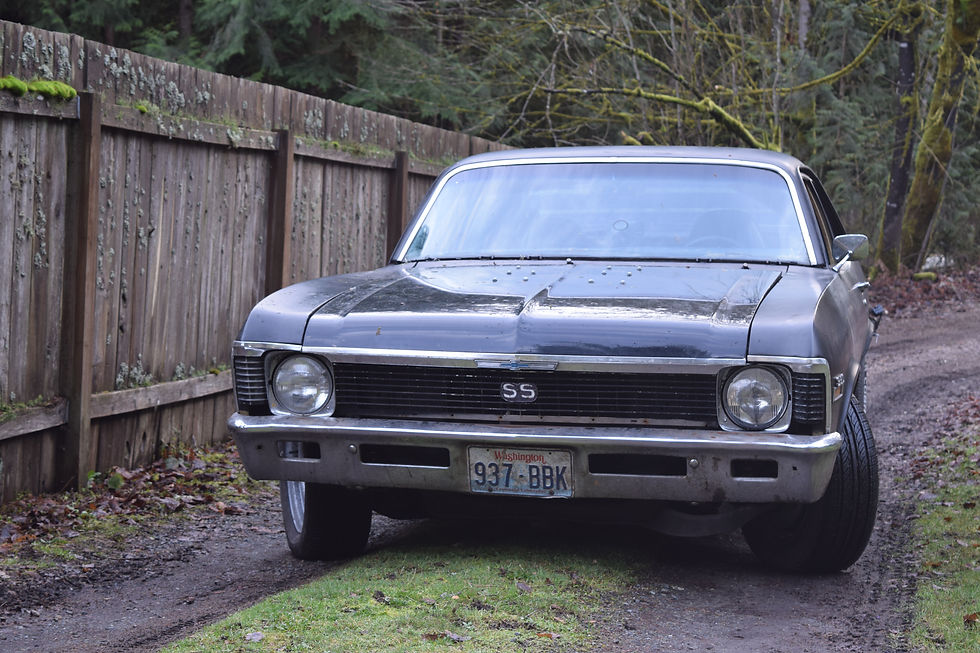
We call it the Super Sketch Nova. She may not be the prettiest of princesses, or the strongest of warriors, or even the fastest of sprinters... but this little Nova's got money spent in all the right places.
Ryan Blankenship - Author | 1/29/2021
In a world where excess generally means pouring all you have into one item on the checklist at the expense of everything else like maybe a 572 BBC but leaving a Turbo 350 or god forbid stock drum brakes, it's refreshing to find a bit of balance under the skin. On the other hand excess means pouring every dime you have into getting it back to the perfect jewel it was when it left Detroit; but then out of fear of twisting your hard earned dough into scrap metal your finished project lives in a permanent tomb never to see the light of day again. Let's face it, cars are made for driving but when most of our daily drivers cross over main street and into the valley of classic cars they seldom stay that way. Not so with this rusty Gem!

The 72 Nova arrived at Not Rod shop with little more than a wrecked subframe and doors and fenders from a 73-74 Nova.
This 1972 Nova started it's journey in Detroit as a 307, powerglide that probably spent most of it's early years sitting in someone's, grandma's driveway. Somewhere between that and finding it's way to Not Rod Shop it suffered a wreck to the passenger side front frame rail and in what appeared to be a feeble attempt at restoration ended up with a bunch of sheet metal from a donor 73. The most evident of these being the extremely heavy doors that left the factory with a single piece of glass and no wing window. Their extreme heft was born from a bill in congress, lobbied by insurance companies, requiring less damage from side impact. A noble goal as it was it also did a number to the hinges in short order so make sure you give the doors a good slam before braving your Sunday afternoon joyride.

Along the way it received a 8.5" GM 10 bolt, a new 4.10 gear set and a mini-spool.
During its tenure at Not Rod Shop it received a whole host of upgrades, namely power front disc brakes, shocks, rear springs, 4.10 gears, drag slicks and an epoxy primer paint job to keep it's previous bare metal restoration from rusting at the first unfavorable weather report. One thing that was not an upgrade however was the 350 small block that ended up having less than 85 psi in 2 cylinders when they were finally compression checked 2 years after it landed between the frame rails. The Muncie 3 speed manual transmission also left much room for improvement. Even with these handicaps the car still managed to run 14.35 in the quarter mile at 96 miles per hour.
Clearly this could be a fantastic performer with the right amount of power under the hood and some gearing to compliment it. Obviously however with budget being a constant irritation it was important to spend it where it really counts while also trying to find some deals on good used equipment. For that task we turned to the floor under the trusty old workbench to retrieve a small journal 327 short block which made its way to the showroom in a 1967 c10 pick-up. After a short stint in a purely offroad 42 Willys MB where it received an air cleaner nut imbedded in the number 6 piston it was laid to rest under the bench and there it sat for 10 years.
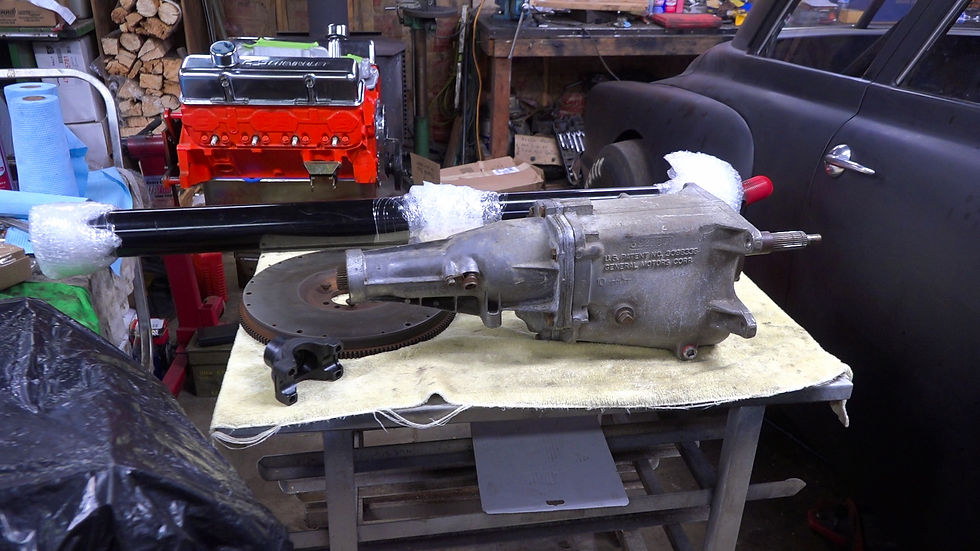
The best addition was the 26/32 spline M20 Muncie out of a 71 Corvette. To make it work it got a 32 spline driveline, 1350 U-joints, Lakewood scatter shield, and a new 11" clutch.
To keep the cost as low as possible the build would consist of this 327 short block with the factory forged crank, a new set of hypereutectic pistons with 2 valve reliefs, and all of the valvetrain and heads currently sitting in the Nova's poor performing 350. Those Sportsman 2 heads made their way onto that 350 in 2003 when they were brand new and after a quick refresh with new valve seals and springs they were ready to go. The cam also found its way into that 350 with those same heads. The specs are 224 @ .050 on both intake and exhaust and .476 with our 1.52 ratio rocker arms as well on both lobes. There would be absolutely no machine work on this block, just a quick 240 grit ball hone of all of the cylinders which netted us 160psi across the board after break-in. The crank ended up with some damage on one of the main journals so we reluctantly shipped it off to the machine Shop to have all of the journals turned and balanced to our new pistons. During the inevitable small parts search we happened across an open-box Performer RPM Air-gap intake manifold for $230 that we just couldn't pass up so that made its way to the crowning spot on our little mouse. All together it cost us less than 1400 bucks to put this engine back together.
Then with a fully assembled and painted engine it was time to focus on drivetrain. While the unit out back may be a 10 bolt it happens to be an 8.5" 10 bolt which shares the same pinion as a 12 bolt and is considered the next best thing in the Chevy lineup of rear axles. Luckily we could save some bucks by leaving it as is for the time being.
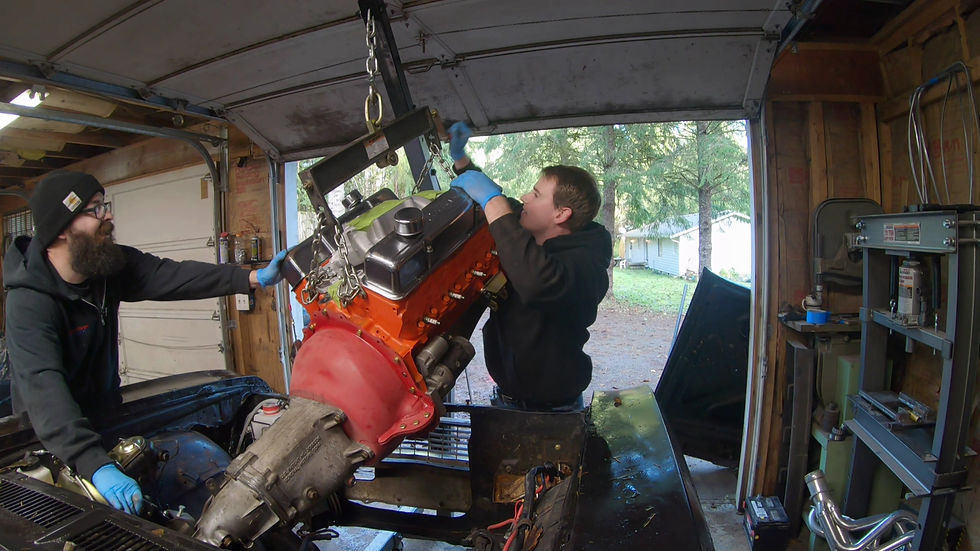
Turning the M20 is a 330HP 327 small block with a set of iron Sportsman 2 heads, 224/224 | .476/.476 Comp Cam all assembled after a simple ball hone and a new set of pistons.
Anyone that's ever tried finding a Muncie 4 speed knows that even a used one comes with a hefty price tag, plan on spending over $1000 for a decent one and even some of those are in need of instant rebuild contrary to what the seller says. For every dollar under $1000 the necessity of rebuild increases exponentially. After searching for several days over no less than 4 different online interfaces we finally found our pick. It had sat in an online marketplace for 7 months waiting for us to finally find it, perhaps it was because the thumbnail was of the 168 tooth flywheel that came with it, or maybe it was because getting face to face with the seller required tedious scheduling as he needed to adhere to the ferry schedule to get the mainland, for whatever reason the ad simply didn't get much attention. In any event we became the beneficiary of an M20 wide ratio out of a 1971 Corvette, and amazingly after gazing intently at each casting number it appears this unit has all the original castings that it left the factory with which is
simply unheard of today. Being of the 71-74 variety meant that it had a 26 spline input and a 32 spline TH400 style output which meant that a new driveshaft with a 32 spline yoke needed to be ordered to replace the 27 spline which also gave us more beef with 1350 u-joints and 1350 pinion yoke. Our clutch disc also needed to be upgraded from the 10 spline but no matter; it was time for a new disc and pressure plate anyway. The flywheel that came with the transmission had also been recently surfaced and after some light sanding to remove the surface rust it was ready for an engine. For the transmission, flywheel, and the stock shifter and linkage for a 71 Vette we had to exchange $1200. Not bad considering all it needed was to be filled with oil.

The New-ish 327 fully dressed between the rails.
To get our newly acquired trans to click into gear we opted for the Hurst
Competition Plus, there's really just nothing like that good old Hurst feel.
Holding it all together is an oldschool 2-piece scatter shield that we once again acquired used for $275 saving us about $225.
After an 8 hour day of doing sit-ups under the car and massaging steel to make our shifter and clutch fork clear the local sheet metal we finally ran the motor for a 12 minute break-in... totally in the dark. The cam and lifters were already seated to each other in the previous motor so we didn't feel the need to keep the neighbors awake for the full twenty minutes.

Inside, the nova sports what appear to be seats out of a 70's Mustang and a nice chrome stick. No other frills or extra weight inside this rusty gem.
Again, with budget ever being a constant factor we opted to skip the $400 charge to set the engine on a local dyno and instead plopped the car on a local linear dyno and after running a 1/4 mile pass in 13.6 seconds at 104 mph we can calculate that against the cars 3304lb weight to give us just under 300HP. Only 30 shy of our goal which we could likely pick up pretty easily in the controlled environment of a dyno cell. Not too bad for the ever budget minded. And ultimately when you take into consideration all the details combined together, like the fact that it runs on pump gas, has a substantial amount of beef holding all the running gear together, stops on a dime, and feels fantastic rowing the 4 speed through all the gears giving you that old nostalgic feeling you never really had but always wanted since childhood, its easy to see that this barebones, gutted shell of steel has money in all the right places and certainly money well spent. Cars were made to be driven... This is a real car, it's certainly not perfect, and that's exactly the way we like it!


I enjoy watching your youtube videos. You have fun, run into difficult problems, have fun, play good background music on the videos, get frustrated but keep things light and know a lot about engines which helps us learn from you. Living in BC, I can relate to your (Washington location - I think) when you are wrenching in the cold damp weather. I enjoyed watching the progress you made as you built the Nova. Where some car shows have devolved into being more about crazy characters and less about pulling wrenches you have stayed the course, thanks for that.